
Column Addition
Adding numbers with only one digit is easy, but how do you add numbers with more than one digit? For example how would you add 12 + 14? This is when we use column addition.
First we organise the numbers into different columns for different digits, in this case, the ones column and the tens column.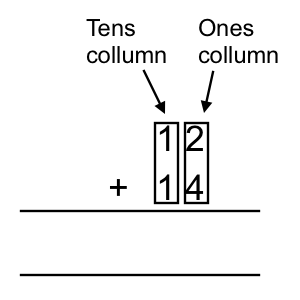
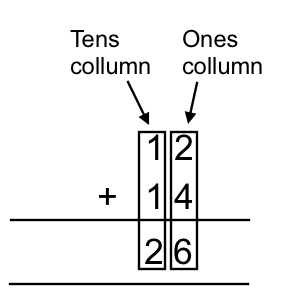
Then we add the numbers in the columns together, for example, here in the ones column we have 2 + 4 which is 6, so we write down 6 in the ones column, in the tens column we have 1 + 1 which is 2, so we write down 2 in the tens column, now we end up with 26.
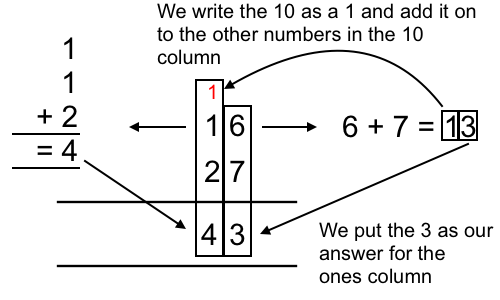
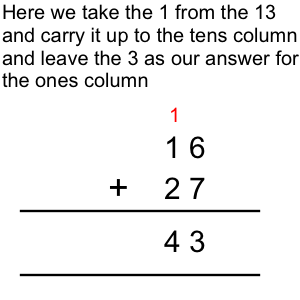
But sometimes this doesnt work, for example when I try and solve 27 + 16, the 2 numbers in the ones column, which are 7 and 6 equal to 13, which doesnt fit in a ones column, so how do I solve this? Where do I put the extra 10? This is where we have to use carrying. Lets use that example of 17 + 16, we allign the numbers into columns like last time, and in the ones column we now have 7 + 6 which equals to 13, we then split the 13 into 1 ten and 3 ones, we write down the 3 into the ones column and write the 1 in the 10s column. Now we add up the numbers in the 10s columns and we treat the new 1 as if it were like a 10, and add it to the 2 and the other 1, which gets us 4 for the tens column.
So to review, when adding numbers with more than 1 digit, we organise them into columns based on digits and add the columns up seperately, if the numbers in a column added together add up to a number with higher digits than the numbers that are being added then we have to carry the extra digits to the next digit (e.g in the equation 14 + 18, in the ones column you have 4 + 8 = 12, 12 is a 2 digit number while 4 and 8 are 1 digit numbers, therefore in this case we would carry the 1 and put 2 down as our answer for the ones column)
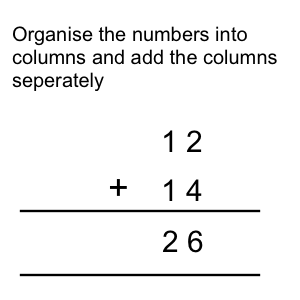
First we organise the numbers into different columns for different digits, in this case, the ones column and the tens column.
Then we add the numbers in the columns together, for example, here in the ones column we have 2 + 4 which is 6, so we write down 6 in the ones column, in the tens column we have 1 + 1 which is 2, so we write down 2 in the tens column, now we end up with 26.
But sometimes this doesnt work, for example when I try and solve 27 + 16, the 2 numbers in the ones column, which are 7 and 6 equal to 13, which doesnt fit in a ones column, so how do I solve this? Where do I put the extra 10? This is where we have to use carrying. Lets use that example of 17 + 16, we allign the numbers into columns like last time, and in the ones column we now have 7 + 6 which equals to 13, we then split the 13 into 1 ten and 3 ones, we write down the 3 into the ones column and write the 1 in the 10s column. Now we add up the numbers in the 10s columns and we treat the new 1 as if it were like a 10, and add it to the 2 and the other 1, which gets us 4 for the tens column.
So to review, when adding numbers with more than 1 digit, we organise them into columns based on digits and add the columns up seperately, if the numbers in a column added together add up to a number with higher digits than the numbers that are being added then we have to carry the extra digits to the next digit (e.g in the equation 14 + 18, in the ones column you have 4 + 8 = 12, 12 is a 2 digit number while 4 and 8 are 1 digit numbers, therefore in this case we would carry the 1 and put 2 down as our answer for the ones column)